Care
Soy wax or paraffin: an honest comparison
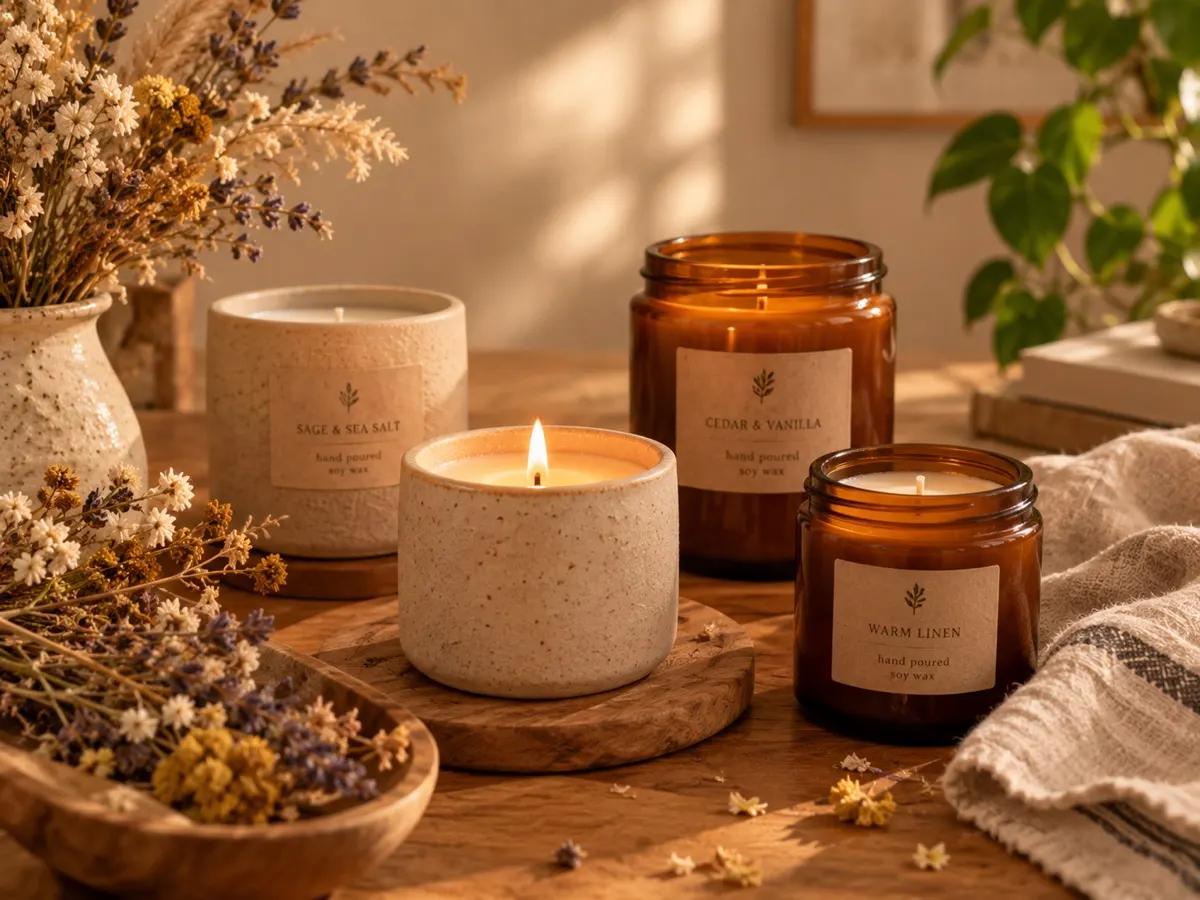
Every candle shop that pours soy says paraffin is toxic. We pour soy, so treat what follows with appropriate suspicion, and here is the honest version anyway.
The short answer
Soy wax burns cooler and cleaner than paraffin, lasts longer for the same jar size, and is renewable. But the research does not support the claim that a well-made paraffin candle poisons your home. What actually affects the air in your room is the wick, the fragrance, how you burn it and whether the room has any ventilation. Wax matters less than any of those.
What is actually true about paraffin
Paraffin is a by-product of petroleum refining. Burning it does release small amounts of compounds including toluene and benzene, which is where the "toxic" claim comes from. The complication is dose: studies that measured properly wicked paraffin candles in normal use found emissions well below levels considered harmful.
Meanwhile every burning candle, soy included, produces soot particles and volatile organic compounds. A candle is a small fire in a room. The honest framing is not "soy is safe, paraffin is poison" but "all candles put something into the air, and some choices put less".
Where soy genuinely wins
It burns longer. Soy has a lower melting point, so it burns slower and cooler. The same jar in soy typically lasts 30 to 50 percent longer than in paraffin. That is the difference you actually notice.
Less soot. A cooler flame deposits less black residue on the glass and the wall behind it.
It washes out. Soy is water soluble at washing temperature, so an empty jar cleans with hot soapy water and becomes a pot for brushes or a small plant. Paraffin has to be scraped.
It is renewable. Soy is a crop; paraffin is refined from crude oil.
Scent behaves differently. Soy releases fragrance more gradually. It can seem quieter in the first ten minutes, and it is usually still noticeable two hours later, where a paraffin candle often peaks early.
Where soy is not automatically better
"Soy wax" is often a blend. Many candles sold as soy contain paraffin or other waxes. If it matters to you, look for wording that names the percentage.
The fragrance is the bigger question. Fragrance oils, not wax, are where phthalates appear. Phthalate-free is a more meaningful thing to look for on a label than the wax type.
The wick matters as much as either. A wick that is too big for the jar burns hot and smokes whatever the wax is. This is the part a good maker gets right by testing, and it never appears on the label.
Soy frosts. Those white crystalline patches on the surface of a soy candle are the wax recrystallising. It is cosmetic and completely normal, though it looks like a fault if nobody told you.
What to look for when you buy a candle
- Named wax, ideally "100% soy" rather than just "soy".
- Phthalate-free fragrance, or essential oils.
- A cotton or wood wick, and no metal core.
- A stated burn time. A maker who tested their candle knows this number. Roughly 5 to 7 hours per ounce of wax is normal for soy.
- A jar that suits the wick. Very wide jars need multiple wicks, or they tunnel.
How to burn any candle more cleanly
This does more for your air than switching wax ever will:
- Trim the wick to 5 mm before every burn. Long wicks are the main cause of soot.
- Let the first burn reach the edges, 2 to 3 hours in an 8 oz jar, so it does not tunnel.
- Burn for 2 to 4 hours, then stop. Longer overheats the wax and the jar.
- Keep it out of draughts, which make the flame flicker, burn unevenly and smoke.
- Open a window occasionally. Ventilation matters more than wax type.
- Stop at about 1 cm of wax left.
What we use, and why
Soy wax, cotton wicks, phthalate-free fragrance, poured in small batches and test-burned before the scent goes on sale. Not because paraffin is poison, but because soy lasts longer per jar, cleans out of the glass, sits better with the way we make everything else, and behaves predictably at the sizes we pour.
Browse the candles, or read how long soy candles burn for the care side.
Quick answers
- Is soy wax better than paraffin?
- Are soy candles non-toxic?
- Why does my soy candle have white patches?